
Why 587AH Has Become the New Mainstream for Energy Storage Cells


:

2026-07-17

Discover why the 587AH battery cell is becoming the new mainstream in energy storage. This article explains how advanced PACK production line equipment handles large cells, ensuring precision assembly, thermal uniformity, and high yield for safer, more cost-effective batteries.

In the rapidly evolving landscape of energy storage, cell capacity has become a decisive battleground. Not long ago, 280AH and 314AH cells dominated the market. Today, a new player is quietly taking the lead: the 587AH cell. But what is driving this shift? While the chemistry and materials of the cell itself are crucial, the real bottleneck lies in how these large-format cells are assembled. This is why the industry is buzzing about the transition, and how a specialized manufacturing approach, like that offered by Songke Xiandao (松科先导), is making it possible.

First, let’s talk about the economics. A 587AH cell stores significantly more energy in a single unit. This means fewer cells are needed to build a battery pack. For an integrator, reducing the number of cells from hundreds to dozens directly cuts down on busbars, wiring, cooling plates, and structural components. This simplifies the entire PACK design. However, handling such a large and heavy cell is physically demanding. A standard cell of this size can weigh over 10 kilograms. Manual handling is not only inefficient but poses serious safety and consistency risks. This is where advanced pack production line equipment becomes the unsung hero.
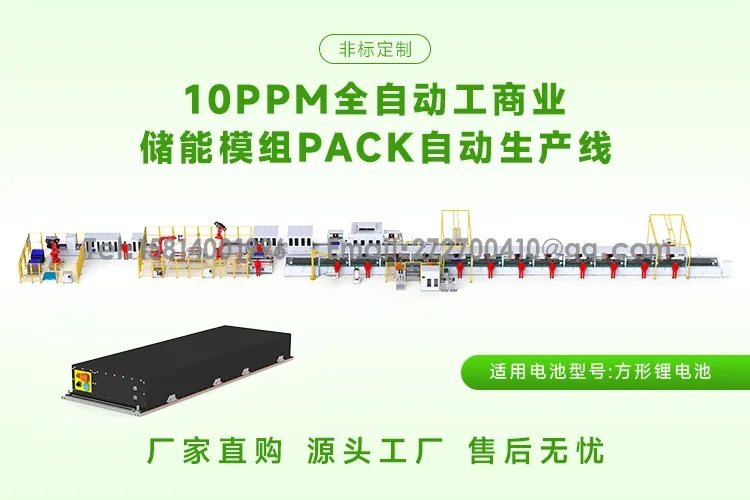
Why 587AH Has Become the New Mainstream for Energy Storage Cells(Image1)

The core advantage of modern PACK lines designed for cells like the 587AH is their ability to maintain micron-level precision under massive load. When you stack these large cells, even a 0.5mm misalignment can cause internal stress, leading to swelling or thermal runaway over time. High-precision servo-driven robots, guided by laser vision systems, ensure that each 587AH cell is placed perfectly into its compartment. This eliminates the risk of short circuits caused by burrs or misalignment on the terminals. For a manufacturer, this reliability translates directly into a higher yield and a longer cycle life for the final product.

Another critical aspect is thermal management. The 587AH cell generates more concentrated heat during rapid charging or discharging. Old-school PACK lines that just bolt cells together are not enough. The new generation of equipment, integrating automatic thermal pad placement and precise adhesive application, ensures that each cell has uniform contact with the cooling plate. If the adhesive thickness varies by even a millimeter, some cells will run hotter than others, accelerating degradation. Automated dispensing systems can control glue flow to within 0.1 grams, guaranteeing a consistent bond. This is a game-changer for safety.

Furthermore, process automation solves the weight problem. In a typical manual line, lifting a 10kg cell all day leads to worker fatigue and high error rates. A fully automated PACK line for 587AH cells uses heavy-duty gantry loaders and AGVs to move the cells seamlessly from sorting to stacking to laser welding. This not only increases the production speed by 300% but also ensures that every welding spot is identical. Laser welding of high-capacity aluminum tabs requires precise focus; automatic tracking systems adjust the weld head in real-time to compensate for any slight variations in tab thickness.

Finally, let’s consider data traceability. In the old days, if a battery pack failed, you had to guess which cell was the bad one. Today’s smart PACK lines assign a unique ID to every 587AH cell. As the cell passes through voltage testing, insulation testing, and capacity grading, the machine logs all data into a cloud-based system. This creates a digital twin of each pack. If a field failure occurs, you can instantly rewind the data to see exactly which robot placed the cell and at what pressure. This level of traceability, powered by advanced control systems from partners like Songke Xiandao, turns battery manufacturing from a black art into a hard science.

In summary, the rise of the 587AH cell is not just a chemistry story—it is a manufacturing engineering story. Without the supporting PACK line technologies that handle weight, precision, thermal uniformity, and data integrity, these large cells would remain a laboratory curiosity. As the market demands lower cost per kilowatt-hour and higher safety, the companies that invest in intelligent, high-precision PACK equipment will be the ones leading the charge. The 587AH is the future, but it is the production line that unlocks its true potential.

:


Any back within 30 days


Copyright © 2025-2026 China Manufacturing Source Manufacturer Partner All Rights Reserved

Online message

If you have any suggestions or questions for us, please get in touch.

We use cookie to improve your online experience. By continuing to browse this website, you agree to our use of cookie.

Cookies

Please read our Terms and Conditions and this Policy before accessing or using our Services. If you cannot agree with this Policy or the Terms and Conditions, please do not access or use our Services. If you are located in a jurisdiction outside the European Economic Area, by using our Services, you accept the Terms and Conditions and accept our privacy practices described in this Policy.
We may modify this Policy at any time, without prior notice, and changes may apply to any Personal Information we already hold about you, as well as any new Personal Information collected after the Policy is modified. If we make changes, we will notify you by revising the date at the top of this Policy. We will provide you with advanced notice if we make any material changes to how we collect, use or disclose your Personal Information that impact your rights under this Policy. If you are located in a jurisdiction other than the European Economic Area, the United Kingdom or Switzerland (collectively “European Countries”), your continued access or use of our Services after receiving the notice of changes, constitutes your acknowledgement that you accept the updated Policy. In addition, we may provide you with real time disclosures or additional information about the Personal Information handling practices of specific parts of our Services. Such notices may supplement this Policy or provide you with additional choices about how we process your Personal Information.


Cookies

Cookies are small text files stored on your device when you access most Websites on the internet or open certain emails. Among other things, Cookies allow a Website to recognize your device and remember if you've been to the Website before. Examples of information collected by Cookies include your browser type and the address of the Website from which you arrived at our Website as well as IP address and clickstream behavior (that is the pages you view and the links you click).We use the term cookie to refer to Cookies and technologies that perform a similar function to Cookies (e.g., tags, pixels, web beacons, etc.). Cookies can be read by the originating Website on each subsequent visit and by any other Website that recognizes the cookie. The Website uses Cookies in order to make the Website easier to use, to support a better user experience, including the provision of information and functionality to you, as well as to provide us with information about how the Website is used so that we can make sure it is as up to date, relevant, and error free as we can. Cookies on the Website We use Cookies to personalize your experience when you visit the Site, uniquely identify your computer for security purposes, and enable us and our third-party service providers to serve ads on our behalf across the internet.

We classify Cookies in the following categories:
 ●  Strictly Necessary Cookies
 ●  Performance Cookies
 ●  Functional Cookies
 ●  Targeting Cookies


Cookie List
A cookie is a small piece of data (text file) that a website – when visited by a user – asks your browser to store on your device in order to remember information about you, such as your language preference or login information. Those cookies are set by us and called first-party cookies. We also use third-party cookies – which are cookies from a domain different than the domain of the website you are visiting – for our advertising and marketing efforts. More specifically, we use cookies and other tracking technologies for the following purposes:

Strictly Necessary Cookies
These cookies are necessary for the website to function and cannot be switched off in our systems. They are usually only set in response to actions made by you which amount to a request for services, such as setting your privacy preferences, logging in or filling in forms. You can set your browser to block or alert you about these cookies, but some parts of the site will not then work. These cookies do not store any personally identifiable information.

Functional Cookies
These cookies enable the website to provide enhanced functionality and personalisation. They may be set by us or by third party providers whose services we have added to our pages. If you do not allow these cookies then some or all of these services may not function properly.

Performance Cookies
These cookies allow us to count visits and traffic sources so we can measure and improve the performance of our site. They help us to know which pages are the most and least popular and see how visitors move around the site. All information these cookies collect is aggregated and therefore anonymous. If you do not allow these cookies we will not know when you have visited our site, and will not be able to monitor its performance.

Targeting Cookies
These cookies may be set through our site by our advertising partners. They may be used by those companies to build a profile of your interests and show you relevant adverts on other sites. They do not store directly personal information, but are based on uniquely identifying your browser and internet device. If you do not allow these cookies, you will experience less targeted advertising.

How To Turn Off Cookies
You can choose to restrict or block Cookies through your browser settings at any time. Please note that certain Cookies may be set as soon as you visit the Website, but you can remove them using your browser settings. However, please be aware that restricting or blocking Cookies set on the Website may impact the functionality or performance of the Website or prevent you from using certain services provided through the Website. It will also affect our ability to update the Website to cater for user preferences and improve performance. Cookies within Mobile Applications

We only use Strictly Necessary Cookies on our mobile applications. These Cookies are critical to the functionality of our applications, so if you block or delete these Cookies you may not be able to use the application. These Cookies are not shared with any other application on your mobile device. We never use the Cookies from the mobile application to store personal information about you.

If you have questions or concerns regarding any information in this Privacy Policy, please contact us by email at . You can also contact us via our customer service at our Site.